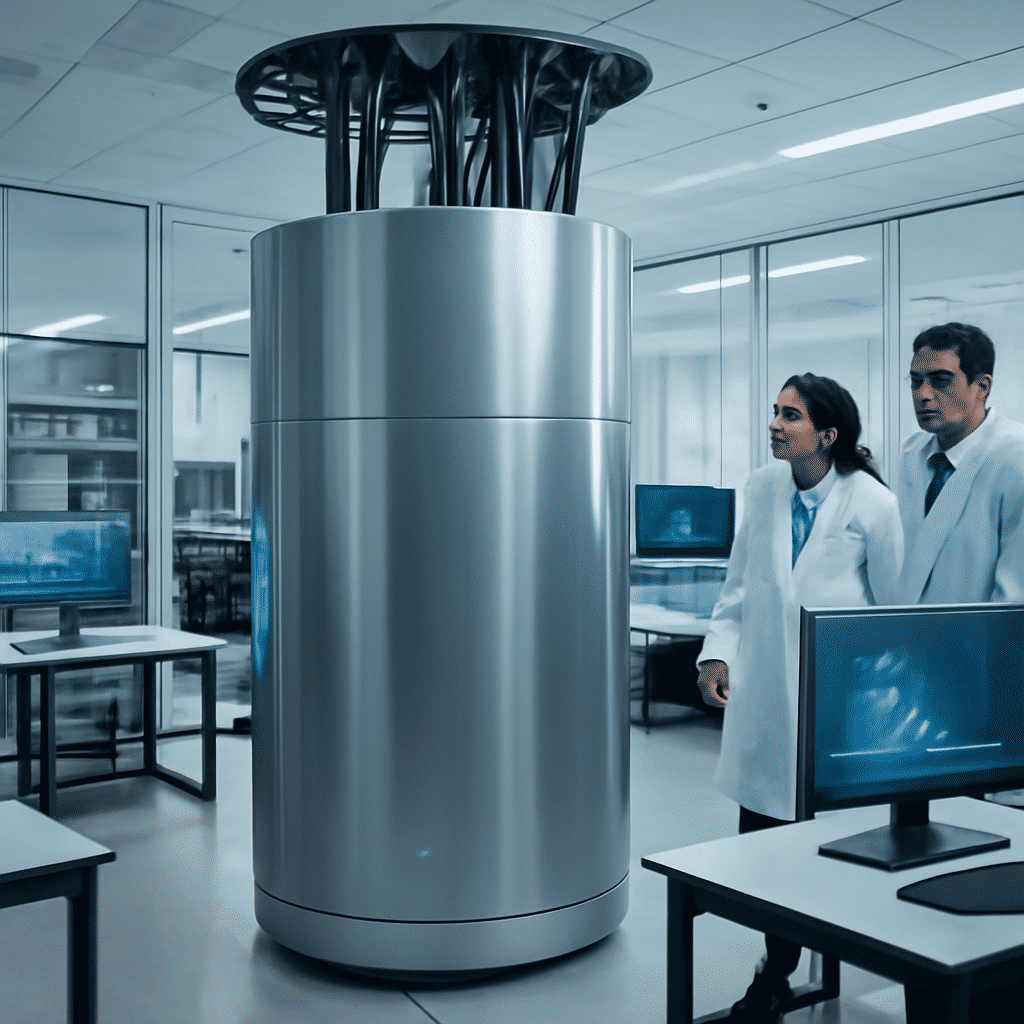
Quantum computing, a field once relegated to the realm of science fiction, is rapidly breaking through the confines of theoretical mathematics and into the practical world of technology. Our latest innovations in this domain are not only pushing the boundaries of what is technologically possible but also heralding a new era of computational capabilities that promise to revolutionize industries across the globe.
At the heart of quantum computing lies the quantum bit, or qubit, which represents information in ways fundamentally different from classical bits. While classical bits are binary, existing in a state of either 0 or 1, qubits exploit the principles of superposition, enabling them to exist in multiple states simultaneously. This phenomenon allows quantum computers to process vast amounts of information in parallel, exponentially increasing their computational power.
In our recent innovations, we have focused on enhancing qubit coherence, which is the time a qubit can maintain its quantum state before decohering due to interference from its environment. By developing advanced error-correcting algorithms and employing novel materials and fabrication techniques, we have achieved unprecedented levels of qubit stability. This progress is crucial for scaling up quantum computers and enabling them to solve complex problems in fields such as cryptography, materials science, and drug discovery.
Moreover, we have made significant advances in quantum entanglement, a unique property that allows qubits to be interconnected no matter the distance separating them. This breakthrough potentially transforms how data is transmitted, leading to ultra-secure communication networks resistant to eavesdropping. Imagine a world where your data is protected by the fundamental laws of physics – that is the future we're striving towards.
Another key innovation is in the development of hybrid architectures that leverage both classical and quantum systems. By creating quantum-classical interfaces, we are facilitating the transition from experimental setups to practical applications. These hybrid systems can undertake complex simulations and optimizations, thus providing insights that were previously out of reach with classical technology alone.
As we continue to push forward, the applications of quantum computing are unfolding in exciting ways. Financial institutions are exploring quantum algorithms for optimized trading strategies. In healthcare, quantum simulations are opening new avenues for personalized medicine and the development of novel drugs. Meanwhile, logistics and supply chain industries benefit from quantum-enhanced optimizations, resulting in unprecedented efficiencies and cost savings.
Despite these remarkable strides, challenges remain. Quantum computing is still in its nascent stages, with many hurdles to overcome in terms of scaling, error correction, and integration with existing systems. However, with continued investment and collaboration among academia, industry, and government organizations, a quantum future is within reach.
In summary, our latest innovations in quantum computing represent not just incremental improvements but transformative advances that will redefine our technological capabilities. By unlocking processing power far beyond that of classical computers, we stand on the cusp of a new technological revolution – one that promises to solve some of humanity's most pressing challenges. As we journey further into this quantum age, the possibilities are limitless, and the future is quantum.